
 EN
EN Pусский
 العربية
 Tiếng Việt
Semiconductor cavity
A semiconductor cavity is a carefully engineered structure that confines light within or near a semiconductor material. It is widely used in optoelectronic devices because it can strengthen the interaction between photons and electrons, improve optical efficiency, and control the emission or amplification of light. In simple terms, the cavity acts like a resonant space in which light waves bounce back and forth, building up specific optical modes that match the geometry and refractive index of the structure.The basic principle of a semiconductor cavity is resonance. When light of certain wavelengths enters the cavity, it reflects between mirrors or interfaces and interferes constructively. This creates standing waves at selected wavelengths while other wavelengths are suppressed. As a result, the cavity can filter, enhance, or direct light with high precision. The quality of this resonance is often described by the quality factor, or Q factor, which measures how long light can remain stored in the cavity before it decays. A higher Q factor usually means lower loss and stronger optical confinement.Semiconductor cavities appear in many forms, including planar cavities, vertical cavities, photonic crystal cavities, microdisks, ring resonators, and distributed Bragg reflector structures. Each type has its own advantages depending on the application. For example, vertical structures are useful for emitting light perpendicular to the wafer surface, while ring and microdisk geometries are effective for compact integrated photonic circuits. Photonic crystal cavities can confine light in extremely small volumes, which is valuable for studying light-matter interaction at very small scales.These cavities are essential in devices such as lasers, light-emitting diodes, optical modulators, detectors, and sensors. In lasers, the cavity provides feedback that allows stimulated emission to dominate, producing coherent light. In LEDs, a cavity can improve extraction efficiency and spectral control. In modulators and detectors, the cavity can increase sensitivity and reduce operating power by enhancing the optical field near active regions.The design of a semiconductor cavity depends on material properties, layer thickness, refractive index contrast, surface quality, and fabrication precision. Even tiny variations can shift the resonant wavelength or increase optical loss. Modern fabrication techniques therefore require nanometer-scale accuracy. Researchers also study thermal effects, nonlinear optical behavior, and quantum interactions inside cavities to develop advanced photonic systems.Overall, semiconductor cavities are a foundation of modern photonics. They enable precise control of light on a small chip and support many technologies in communication, sensing, computing, and imaging.
Producto
Categoría:
-
Semiconductor cavity
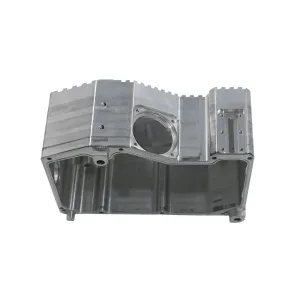
Su clasificación: SemiconductorVistas: 13Número:Tiempo de liberación: 2026-09-21 15:29:21Semiconductor cavity components are essential parts used in advanced semiconductor manufacturing equipment. Designed for high precision, cleanliness, and stable performance, these cavities support wafer processing, vacuum systems, and semiconductor production applications. Reliable semiconductor cavity solutions help improve equipment efficiency, process accuracy, and manufacturing consistency in modern chip fabrication and electronic industries.
Noticias
Categoría:
¡Sin resultados de búsqueda!
Caso
Categoría:
¡Sin resultados de búsqueda!
Video
Categoría:
¡Sin resultados de búsqueda!
Descargar
Categoría:
¡Sin resultados de búsqueda!
Reclutamiento
Categoría:
¡Sin resultados de búsqueda!
Productos recomendados
¡Sin resultados de búsqueda!



 Teléfono