

Introduction to CNC Machining Tolerances and Surface Finishes
In precision manufacturing, producing a component that matches a design drawing is not only about shaping raw materials into the correct form. The accuracy of dimensions, the quality of surfaces, and the consistency of production all determine the final performance of a machined part.
CNC Machining Tolerances and surface finishes are two of the most important factors that affect the quality, reliability, and functionality of CNC machined components.
CNC machining tolerances define how much variation is acceptable between the designed dimensions and the actual manufactured dimensions. Surface finishes describe the texture, smoothness, and quality of the final machined surface.
For industries such as aerospace, automotive, Medical Equipment, electronics, and automation, proper control of CNC machining tolerances and surface finishes is essential. Even a small dimensional error or unsuitable surface condition can affect assembly accuracy, product performance, and service life.
This complete guide explains the importance of CNC machining tolerances and surface finishes, including their types, influencing factors, inspection methods, and how they help manufacturers achieve high-quality precision components.
What Are CNC Machining Tolerances?
CNC machining tolerances refer to the acceptable difference between the specified dimensions on an engineering drawing and the actual dimensions of a finished part.
In CNC machining, it is almost impossible to manufacture a component with exactly zero deviation. Therefore, designers define acceptable tolerance ranges to ensure parts function properly.
For example, if a shaft diameter is designed as 20 mm, the drawing may specify a tolerance that allows a small variation while still ensuring proper assembly.
The purpose of CNC machining tolerances is to control manufacturing accuracy and ensure that components meet functional requirements.
Why CNC Machining Tolerances Are Important
Proper CNC machining tolerances directly affect product performance.
Many mechanical components need to fit together accurately.
Incorrect CNC machining tolerances may cause:
Loose connections
Difficult assembly
Component failure
Accurate tolerances ensure that different parts work together correctly.
Parts manufactured with suitable CNC machining tolerances provide better performance and longer service life.
Consistent dimensions help prevent:
Excessive wear
Mechanical instability
Operational problems
Proper tolerance control reduces rejected parts.
When CNC machining tolerances are correctly defined, manufacturers can optimize production processes and reduce unnecessary material waste.
Types of CNC Machining Tolerances
Different applications require different levels of tolerance control.
General Tolerances
General CNC machining tolerances apply to standard dimensions where extremely high precision is not required.
These tolerances are commonly used for:
Structural components
Non-critical parts
General mechanical products
Tight Machining Tolerances
Tight CNC machining tolerances are required for precision components.
Applications include:
Aerospace parts
Medical components
High-performance mechanical systems
Tight tolerances require:
Advanced CNC equipment
Accurate programming
Strict inspection processes
Geometric Tolerances
Geometric CNC machining tolerances control the shape and position of features.
Examples include:
Flatness
Parallelism
Position accuracy
Circularity
Geometric tolerances help ensure complex components maintain correct functional relationships.
Factors Affecting CNC Machining Tolerances
Achieving accurate CNC machining tolerances depends on multiple factors.

Machine Accuracy
The performance of CNC equipment directly affects machining accuracy.
Important factors include:
Machine rigidity
Positioning accuracy
Calibration condition
Well-maintained CNC machines provide more stable tolerance control.
Tool Condition
Cutting tools influence CNC machining tolerances.
Worn tools may cause:
Dimensional changes
Poor surface quality
Increased machining errors
Regular tool inspection helps maintain accuracy.
Material Properties
Different materials behave differently during machining.
Factors such as:
Thermal expansion
Hardness
Material stability
can affect final CNC machining tolerances.
Programming Accuracy
CNC programs control machining movements.
Accurate programming helps ensure:
Correct tool paths
Stable cutting conditions
Consistent dimensions

What Are Surface Finishes in CNC Machining?
Surface finishes describe the texture and smoothness of a machined surface after processing.
The quality of surface finishes affects:
Appearance
Friction
Wear resistance
Corrosion resistance
Product performance
Different applications require different levels of surface finishes.
For example, a decorative component may require a smoother surface finish, while a mechanical part may require a specific surface texture for proper lubrication.
Importance of CNC Machining Surface Finishes
Proper surface finishes provide several advantages.
Improved Appearance
High-quality surface finishes improve the visual appearance of components.
This is important for:
Consumer products
Precision equipment
Visible mechanical parts
Better Functional Performance
Surface conditions affect how parts operate.
Suitable surface finishes can improve:
Sliding performance
Contact accuracy
Wear resistance
Increased Durability
Good surface finishes help protect components from:
Friction damage
Environmental effects
Surface corrosion
Common CNC Machining Surface Finishes
Different manufacturing requirements require different surface finishes.
Machined Surface Finish
A standard machined finish is created directly during CNC machining operations.
Characteristics include:
Visible tool marks
Functional surface quality
Efficient production
This surface finish is suitable for many general applications.
Polished Surface Finish
Polishing improves surface smoothness.
Benefits include:
Reduced roughness
Improved appearance
Better surface performance
Brushed Surface Finish
Brushing creates a directional texture on the surface.
It is often used for:
Decorative applications
Equipment panels
Visible components
Anodized Surface Finish
Anodizing is commonly used for aluminum components.
Benefits include:
Improved corrosion resistance
Enhanced surface hardness
Better appearance
Powder Coating Surface Finish
Powder coating provides a protective surface layer.
Advantages include:
Good durability
Color options
Environmental resistance
Relationship Between CNC Machining Tolerances and Surface Finishes
CNC machining tolerances and surface finishes are closely connected.
A part may have accurate dimensions but still require a suitable surface finish for proper function.
For example:
Precision assembly parts require accurate CNC machining tolerances.
Sliding components require suitable surface finishes.
Decorative parts require improved surface finishes.
Successful CNC manufacturing requires controlling both CNC machining tolerances and surface finishes together.
How Manufacturers Control CNC Machining Tolerances and Surface Finishes
Professional CNC manufacturing requires systematic quality management.
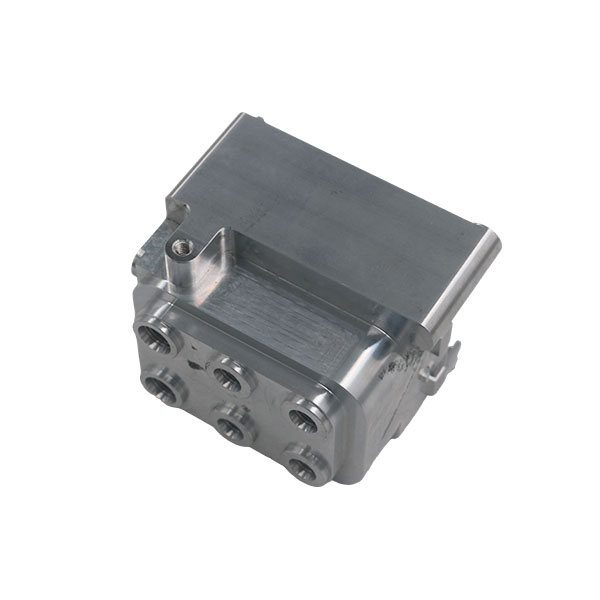
Advanced CNC Equipment
Modern CNC machines provide:
Higher positioning accuracy
Better process stability
Improved repeatability
This helps maintain consistent CNC machining tolerances.
Precision Measurement
Inspection equipment is essential for verifying CNC machining tolerances.
Common measurement methods include:
Coordinate measuring machines
Micrometers
Calipers
Surface roughness testers
These tools help confirm dimensional accuracy and surface quality.
Process Optimization
Manufacturers optimize machining parameters to improve surface finishes.
Important factors include:
Cutting speed
Feed rate
Tool selection
Machining strategy
Proper optimization improves both efficiency and quality.
CNC Machining Tolerances and Surface Finishes for Different Industries
Different industries have different requirements for CNC machining tolerances and surface finishes.
Aerospace Components require:
High precision
Strict tolerance control
Reliable surface performance
CNC machining tolerances are critical for aerospace safety and functionality.
Automotive Industry
Automotive Components require consistent quality and durability.
Applications include:
Engine parts
Transmission components
Mechanical assemblies
Proper CNC machining tolerances ensure reliable vehicle operation.
Medical components require:
Accurate dimensions
Smooth surfaces
Reliable materials
Surface finishes are especially important for medical equipment performance.
Electronics Industry
Electronic components often require:
Precise dimensions
Good surface quality
Reliable assembly
CNC machining tolerances help ensure accurate component integration.
How to Select the Right CNC Machining Tolerances and Surface Finishes
Choosing suitable CNC machining tolerances and surface finishes depends on several factors.
Understand Functional Requirements
Determine how the component will be used.
Consider:
Load conditions
Contact requirements
Environmental conditions
Avoid Over-Specifying Tolerances
Extremely tight CNC machining tolerances can increase production costs.
The best approach is selecting tolerances based on actual performance needs.
Select Suitable Surface Finishes
The required surface finishes depend on:
Appearance requirements
Friction conditions
Environmental exposure
Consider Material Characteristics
Different materials respond differently to machining and finishing processes.
Material selection affects both:
CNC machining tolerances
Surface finishes
Future Development of CNC Machining Tolerances and Surface Finishes
With the development of intelligent manufacturing technology, CNC machining accuracy continues improving.
Future trends include:
Automated inspection systems
Real-time machining monitoring
Smart CNC control
Advanced surface treatment technologies
These developments will help manufacturers achieve better CNC machining tolerances and more advanced surface finishes.
Conclusion
CNC machining tolerances and surface finishes are essential elements in precision manufacturing. Tolerance control ensures that parts meet dimensional requirements, while surface finishes improve appearance, durability, and functional performance.
By controlling CNC machining tolerances through accurate equipment, professional programming, and strict inspection methods, manufacturers can produce reliable components with consistent quality.
At the same time, selecting suitable surface finishes helps improve product performance and service life.
Understanding the relationship between CNC machining tolerances and surface finishes allows manufacturers to make better decisions, optimize production processes, and create high-quality CNC machined parts for modern industrial applications.
Este sitio web utiliza cookies para garantizar que obtenga la mejor experiencia en nuestro sitio web.
 EN
EN Pусский
 العربية
 Tiếng Việt



 Teléfono
Comentario
(0)